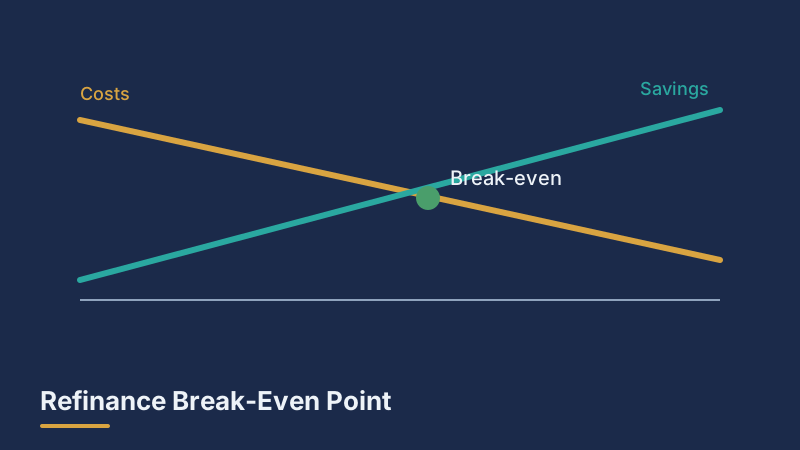
A refinance replaces your existing mortgage with a new one, and like any new mortgage, it comes with costs. Whether refinancing helps or hurts depends largely on one calculation: the break-even point. Here is how to think it through.
What Refinancing Actually Costs
Closing costs on a refinance typically include several categories:
- Lender fees: origination or underwriting charges, and any discount points you choose to pay.
- Third-party fees: appraisal, credit report, title search, and title insurance.
- Government charges: recording fees and, in some areas, taxes on the new mortgage.
- Prepaid items: amounts collected at closing for property taxes, insurance, and interim interest.
Some lenders advertise no-closing-cost refinances. Those costs do not vanish; they are usually recovered through a higher interest rate or by adding them to the loan balance. That structure can still be reasonable for some borrowers, but it should be a conscious choice, not a surprise.
Calculating Your Break-Even Point
The break-even point is how long it takes for your monthly savings to repay the cost of the refinance. The basic math is simple: divide total closing costs by the monthly payment reduction. If a refinance costs a given amount and lowers your payment by a certain amount each month, the division tells you how many months until you come out ahead.
Then compare that timeline to your plans. If you expect to sell or refinance again before break-even, the refinance likely costs you money overall, even though the monthly payment looks better.
Watch the Term Reset
A subtle cost hides in the calendar. If you are several years into a 30-year loan and refinance into a new 30-year term, you restart the clock. Your payment may drop, but you could pay more total interest over the combined life of the loans. Options to consider:
- Refinance into a shorter term that roughly matches your remaining years.
- Keep the new 30-year term for flexibility but voluntarily pay extra toward principal each month.
Beyond the Monthly Payment
A good refinance decision weighs total cost over the time you expect to hold the loan, not just the monthly number. Ask each lender for a Loan Estimate, compare the figures side by side, and run the break-even math with your own timeline. If the numbers work for how long you realistically plan to stay, a refinance can be a sound financial move; if they do not, waiting costs you nothing but patience.
Article Was Generated By AI.